On This Day In History: Tycho Brahe’s Supernova Observed In Constellation Cassiopeia – On Nov 6, 1572
a supernova was first observed by the German astronomer Wolfgang Schüler of Wittenberg.
This spectacular celestial event was observed in the W-shaped constellation of Cassiopeia but was seen by many observers throughout Europe and in the Far East.
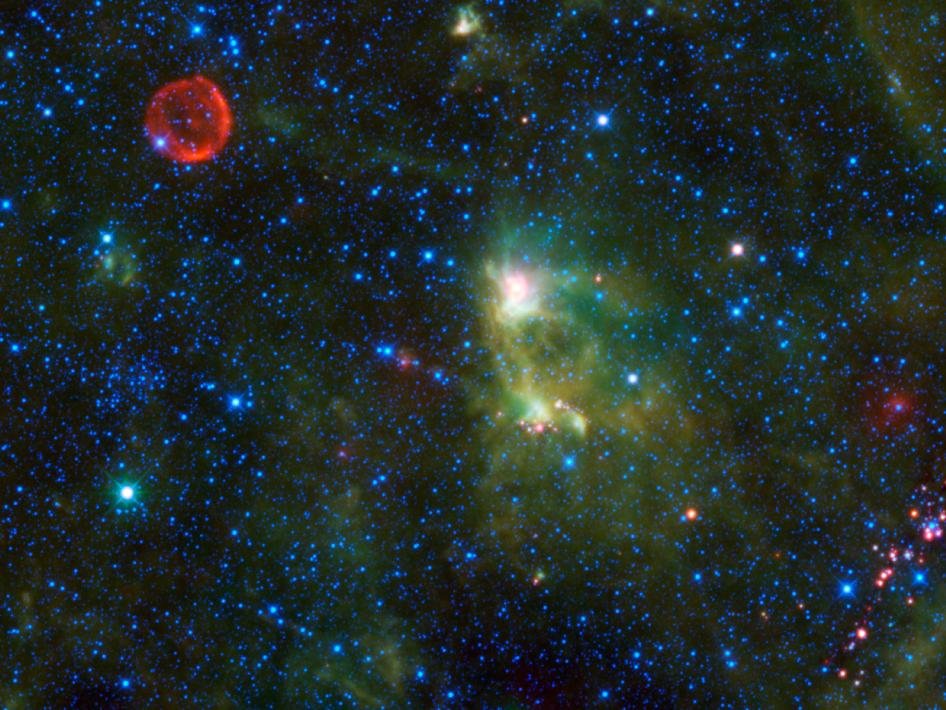
The brilliant light source appeared as a new star, adjacent to the fainter star seen just northwest of the middle of the “W.”
For two weeks it was brighter than any other star in the sky and visible in daytime. By month’s end, it began to fade and change color, from bright white to yellow and orange to faint reddish light. It was even possible to observe it during the day. It was visible to the naked eye for about 16 months until March 1574.
Tycho Brahe, Danish astronomer, first noticed this new star on 11 Nov 1572; his attention was attracted by a star in Cassiopeia, which was shining very bright – at approximately the brightness of Jupiter – and which had not been seen in this place before.
Tycho was not the first to observe the 1572 supernova, although he was probably the most accurate observer of the object. Almost as accurate were observations of his European colleagues such as Wolfgang Schüler, Thomas Digges, an English mathematician andastronomer and many others.
Brahe began to methodically record its appearance.

 Creators of mankind
 Description of “Tall white aliens”
 Where they came from?
 About hostile civilizations
 The war for the Earth
 “Tall white aliens” about eternal life
 Video: “Nordic aliens”
 Aliens
 Alien encounters
 The aliens base
 UFO
UFO Technology UFO
 Underground civilization
 Ancient alien artifacts
 Military and UFO
 Mysteries and hypotheses
 Scientific facts