Category: News

NASA pushes for Moon, deep space with crucial tests

With the moon as its immediate goal, NASA is pushing hard on deep space exploration. In a press conference from Johnson Space Center (JSC) in Houston today (April 26), NASA officials talked through the status of their deep space exploration program and the upcoming launches...

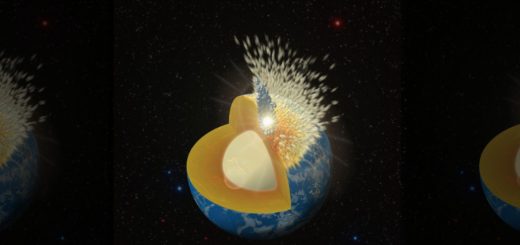
Early Earth took a heavy beating after the Moon was formed

Earth may have been bruised by the impact of more than one moon-size object early in its life. New simulations suggest that much of the material that crashed into our young planet may have been swallowed up by Earth’s core or ricocheted back into space,...

Supersize stars may be more common than previously thought

Heavyweight stars up to hundreds of times the mass of the sun may be more abundant than previously thought, a new study finds. These findings suggest that black holes and other exotic remnants of dead massive stars may also be more common than previously suspected,...

Jupiter moon Europa’s possibly porous surface could doom a lander

Putting a lander down on Jupiter’s potentially life-supporting moon Europacould be even trickier than engineers had thought. Europa’s surface may be extremely porous, so any probe that touches down there might run the risk of sinking into a sort of extraterrestrial quicksand, a new study...

NASA’s next Mars lander passes key test ahead of May launch

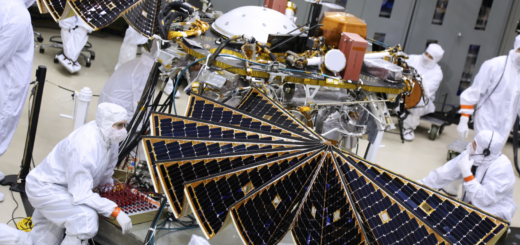
LITTLETON, Colo. — NASA’s next Mars mission — a lander designed to probe the Red Planet’s deep interior and eavesdrop on rumbling Marsquakes — is reaching “ship and shoot” status. As spacecraft names go, this one’s is a mouthful: Interior Exploration using Seismic Investigations, Geodesy...

Saturn’s icy moon Dione shines in stunning Cassini photo

The battered face of Saturn’s frigid moon Dione gets a close-up in a gorgeous photo by NASA’s Cassini spacecraft. Though the image was released Monday (March 12), Cassini took it on July 23, 2012, when the probe was about 260,000 miles (418,000 kilometers) from the...

Ancient Mars may have thawed through methane bursts

Ancient Mars may have been warmed by bursts of methane trapped under its surface, a new study finds — which could help explain past episodes of warmer, wetter climate on the otherwise freezing Red Planet. Although Mars is now cold and dry, there are decades...

Translate »