Category: News

Solar cells: Losses made visible on the nanoscale

Solar cells made of crystalline silicon achieve peak efficiencies, especially in combination with selective contacts made of amorphous silicon (a-Si:H). However, their efficiency is limited by losses in these contact layers. Now, for the first time, a team at Helmholtz-Zentrum Berlin (HZB) and the University...

The solar wind, explained

The solar wind is a flow of particles that comes off the sun at about one million miles per hour and travels throughout the entire solar system. First proposed in the 1950s by University of Chicago physicist Eugene Parker, the solar wind is visible in...

Explaining Parker Solar Probe’s magnetic puzzle

When NASA’s Parker Solar Probe sent back the first observations from its voyage to the Sun, scientists found signs of a wild ocean of currents and waves quite unlike the near-Earth space much closer to our planet. This ocean was spiked with what became known...

NASA begins final assembly of spacecraft destined for asteroid Psyche

A major component of NASA’s Psyche spacecraft has been delivered to the agency’s Jet Propulsion Laboratory in Southern California, where the phase known as assembly, test, and launch operations is now underway. Over the next year, the spacecraft will finish assembly and undergo rigorous checkout...

Why we need to get better at predicting space weather

  The sun is the most important source of energy for sustaining life on Earth, but it gives us a lot more than just light and heat. It also gives us solar storms. Disturbances on the sun, such as coronal mass ejections produced by solar...

Many planetary systems prematurely evaporate into thin air

When stars are born, large clouds of gas and dust form that are known as circumstellar discs. Research by Ph.D. candidate Francisca Concha-Ramírez shows that strong radiation from neighboring stars soon evaporates the dust in these discs, which can prevent planet formation at an early...

NASA’s Roman mission predicted to find 100,000 transiting planets

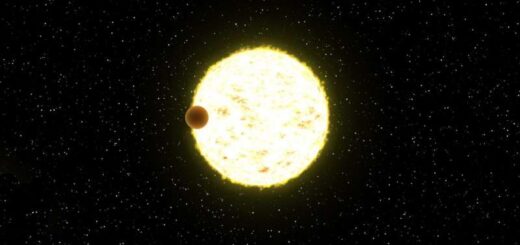
NASA’s Nancy Grace Roman Space Telescope will create enormous cosmic panoramas, helping us answer questions about the evolution of our universe. Astronomers also expect the mission to find thousands of planets using two different techniques as it surveys a wide range of stars in the...

Translate »