DNA from ancient Irish tomb indicates royal incest, study finds
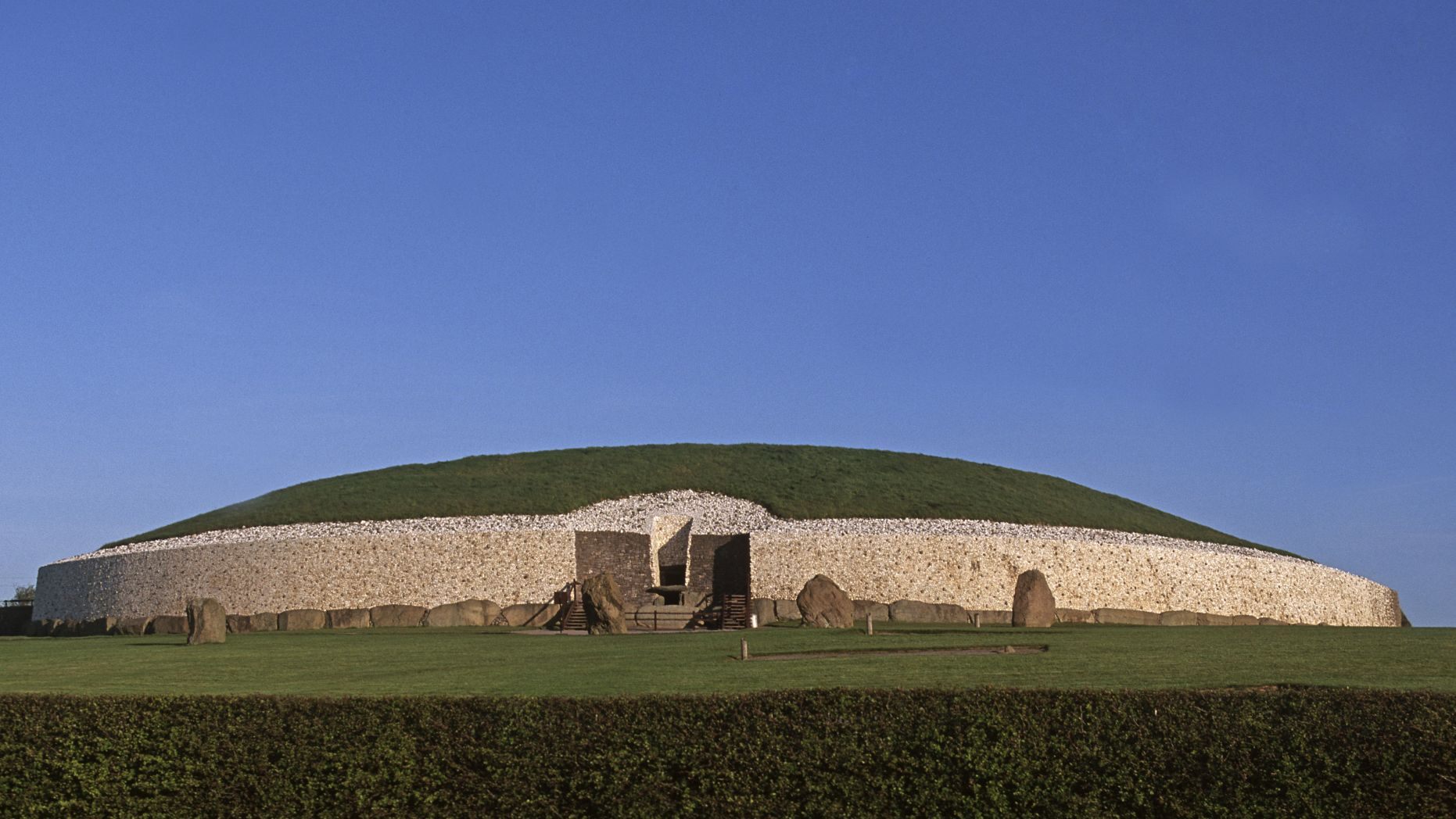
The remains of a man found buried inside a stone tomb in Ireland indicates he was the product of incest, a new study reveals.
Researchers found that DNA extracted from the man’s remains contains a much higher number of identical versions of the same genes – which indicates that his parents were either siblings or a parent and child.
The discovery inside the gigantic tomb also provides insights into how ruling families operated during that time and their ability to build massive engineering projects.
The man’s bones had previously been found in the Newgrange passage tomb, a large mound near the River Boyne, according to the study’s abstract.
WORLD’S LARGEST REPTILE EGG DISCOVERED ON ANTARCTICA
For the study, led by geneticists Lara Cassidy and Daniel Bradley of Trinity College Dublin, researchers examined DNA from 44 people buried in various Irish tombs and graves dating to between roughly 6,600 and 4,500 years ago.
ROYAL DYNASTY FACIAL DEFORMITY KNOWN AS ‘HABSBURG JAW’ WAS CAUSED BY INBREEDING, SCIENTISTS SAY
Only the Newgrange man, who was interred in the largest and most impressive structure, had inherited genetic markers of incest.
The researchers, led by geneticists Lara Cassidy and Daniel Bradley of Trinity College Dublin, published their findings on Wednesday in the journal Nature.
In December of last year, a study revealed that the facial deformity known as “Habsburg Jaw” – seen in the dynasty of Spanish and Austrian royals – is a sign of inbreeding.


 Creators of mankind
 Description of “Tall white aliens”
 Where they came from?
 About hostile civilizations
 The war for the Earth
 “Tall white aliens” about eternal life
 Video: “Nordic aliens”
 Aliens
 Alien encounters
 The aliens base
 UFO
UFO Technology UFO
 Underground civilization
 Ancient alien artifacts
 Military and UFO
 Mysteries and hypotheses
 Scientific facts