38,000-Year-Old Cave Engraving Of An Auroch Found In Prehistoric Cave In Southwestern France
A 38,000-year-old engraved, complex image of an aurochs (or extinct wild cow), was found in a cave located Vezere Valley, in southwestern France.
This finding is one of the earliest known graphic imagery discovered in Europe.
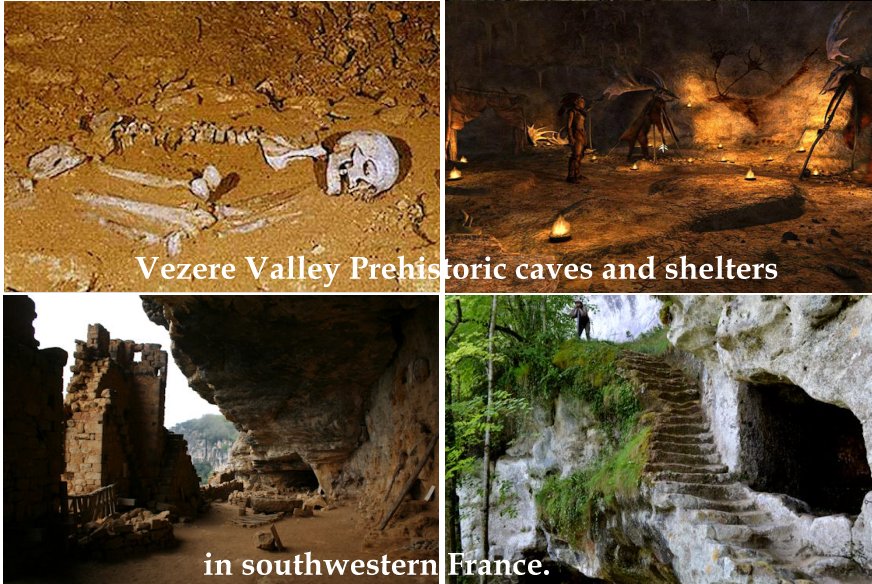
The Vézère Valley is famed for its prehistoric cave systems, containing numerous cave paintings and hominid remains. UNESCO collectively designated this valley a World Heritage Site in 1979. (Lascaux is an example among the sites that contain remarkable prehistoric caves.)
The slab was found at Abri Blanchard – a site in southwestern France which, along with its sister site Abri Castanet, has previously yielded hundreds of significant finds such as pierced animal teeth, pierced shells, ivory and soapstone beads, engravings, and paintings on limestone slabs.
White and his team members began their methodical exploration of remaining deposits at the site in 2011, with the discovery occurring in 2012.
Many Aurignacian wall paintings, engravings and bas-relief sculptures had been recognized and studied before World War I in the Vézère Valley of SW France and Aurignacian art gives new insights into human culture that lived during the Aurignacian period dated from about 43,000 to 33,000 years ago.



 Creators of mankind
 Description of “Tall white aliens”
 Where they came from?
 About hostile civilizations
 The war for the Earth
 “Tall white aliens” about eternal life
 Video: “Nordic aliens”
 Aliens
 Alien encounters
 The aliens base
 UFO
UFO Technology UFO
 Underground civilization
 Ancient alien artifacts
 Military and UFO
 Mysteries and hypotheses
 Scientific facts